
Recall News · Explainer
What your recall number actually means: 26V, decoded.
Every recall number is four facts in ten characters. 26V685000 breaks down as: 26, filed in 2026; V, a vehicle recall; 685, the sequence; 000, the first record under it. Our database holds 15,666 campaigns, every one carrying V, with 691 filed in 2026 — and the last three digits are the part people miss: they're what separate Ford's 00V210001 from Mazda's 00V210002, the same filing, two records. Plus the second numbering system nobody warns you about: the manufacturer's own number.
Check if your vehicle is affected
A story about a model is not proof that your individual vehicle is affected. Only a VIN check can tell you whether your vehicle has an open recall.
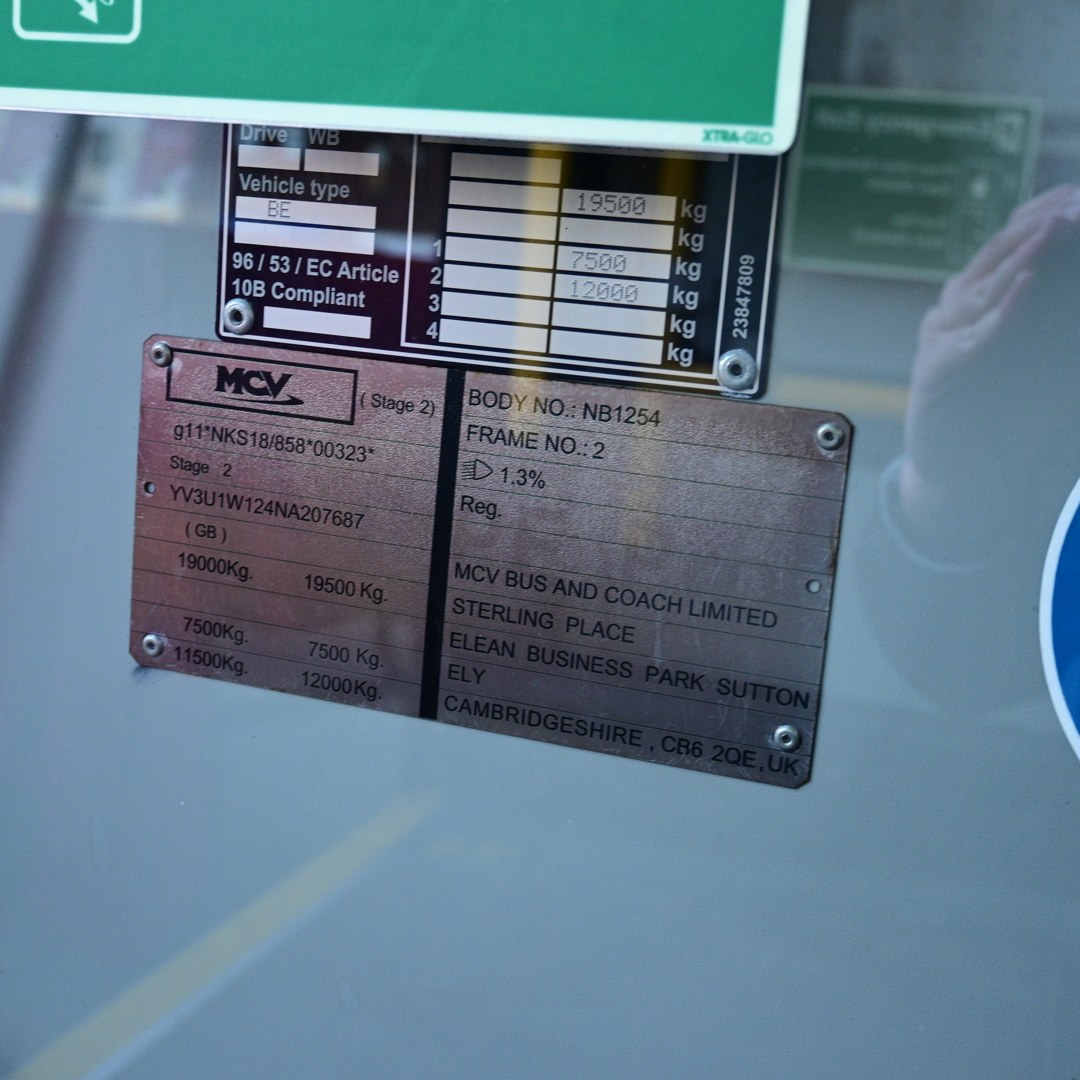
Hullian111, CC BY-SA 4.0, via Wikimedia Commons
Reading any recall number in 30 seconds
- Find the number: it's on the recall letter, the NHTSA record, and our record pages — a string like 26V685000.
- Read the first two digits as the year the recall was filed: 26 means 2026, 00 means 2000. The V after them marks the filing as a vehicle recall.
- Read the next three digits as the sequence: filings are numbered in order as they arrive through the year. 2026 sequences run from 001 to 714.
- Read the last three digits as the record under that sequence: 000 is the first record. When one sequence covers two records — Ford and Mazda sharing 00V210 — the records get 001 and 002.
- Look for the manufacturer's own number too: Subaru calls 26V685 'WRI26,' Tesla calls 24V935 'SB-24-00-018.' The dealer and the letter use the manufacturer's number; NHTSA and our record pages use the NHTSA number. They're the same recall.
- When two recalls look alike, compare the full number, not the headline. Same base, different last digits means two records. Different base entirely means two different filings — even for the same defect.
Affected vehicles
Model years included in this recall, per the NHTSA record.
| YEAR RANGE | MODEL | NOTES |
|---|---|---|
| 2026 | Subaru Crosstrek & Forester | Example — NHTSA 26V-685: 26 = filed in 2026, V = vehicle recall, 685 = the sequence, 000 = the first record under it. Subaru's own number for the same recall is WRI26. |
| 2017–2025 | Tesla Model 3, Model Y & Cybertruck | Example — NHTSA 24V-935: 24 = filed in 2024, sequence 935, first record. Tesla's own number is SB-24-00-018 — the number a Tesla service center will recognize. |
One string, four facts
Safety
Every recall number is four facts packed into ten characters. Take 26V685000, the Subaru ball-joint recall from October 2026. 26 is the year the recall was filed — 2026. V marks the filing as a vehicle recall; every one of the 15,666 campaigns in our database carries V in that position. 685 is the sequence, assigned in order as filings arrive through the year — 2026 sequences run from 001 to 714. And 000 is the record under that sequence: the first one. Read left to right, the number tells you when, what kind, which filing, and which record — before you read a single word of the defect description.
The last three digits are the part people trip over, because they're usually zeros — and zeros look like nothing. They're not. When one sequence covers more than one record, the records get numbered: 001, 002, and so on. Ford and Mazda share sequence 00V210 from September 8, 2000 — the same cracked speed-control cable, reported the same day, filed as 00V210001 for Ford and 00V210002 for Mazda. Our record pages for those two campaigns live at different URLs for exactly that reason. Two records, one sequence, two different cars.
Then there's the second numbering system, which is where phone calls go wrong. Every manufacturer assigns its own number to the same recall: Subaru calls 26V685 'WRI26,' Tesla calls 24V935 'SB-24-00-018,' Blue Bird calls its headlight recall 'R25DH.' The owner letter, the dealer, and the service department use the manufacturer's number. NHTSA, journalists, and our record pages use the NHTSA number. Same recall, two names — and a caller who gives the dealer the wrong system's number gets told, incorrectly, that no such recall exists.
Why two numbers can look like one recall
Reading the number changes a recall from a scary headline into a checkable fact. '26V685' stops being alphabet soup and becomes: filed this year, vehicle recall, sequence 685, first record — a specific filing you can look up, compare against your letter, and hand to a dealer without ambiguity.
It also defuses the duplicate scare. Owners who find two records for what looks like one recall often assume a database error or a second defect. Usually it's a shared sequence: one filing, two manufacturers, two records. The last three digits are the tell, and once you know to look at them, the confusion disappears.
And it changes the dealer conversation. Walking in with the manufacturer's number from the letter — WRI26, not 26V685 — skips the most common failure mode of recall service: the service writer searching the wrong numbering system and finding nothing. The number is a tool, and like any tool, it works when you use the right end.
Remedy and cost
- Status
- Same recall, two names — give the dealer their number
- Cost
- Free
You don't need to do anything with a recall number except use it precisely. When you call a dealer, give them the manufacturer's number from the letter (WRI26, SB-24-00-018) — it's the one their system is keyed to. When you search NHTSA or our record pages, use the full NHTSA number (26V685000 or its short form 26V685).
If a search returns two records for what looks like one recall, check the last three digits before assuming a duplicate. Shared sequences are real: one filing, two manufacturers, two records, two different cars. And if a number you find online doesn't match the number on your letter, trust the letter — then run the VIN, which settles which campaign actually covers your car regardless of numbering.
Quick answers
| Explainer type | Reference — evergreen, not a single recall |
| Database counts | 15,666 campaigns; 691 filed in 2026; every campaign number carries V in the third position (MyAutoRecalls database, counted November 1, 2026) |
| Campaigns referenced | 4 — NHTSA 26V-685, 00V-210 (two records), 24V-935 |
| The format | Year (2 digits) + V + sequence (3 digits) + record (3 digits) |
| The second number | Every manufacturer assigns its own number too — WRI26, SB-24-00-018, R25DH |
| Time to check | About a minute with the VIN |
Questions owners ask
Does the first part of the number tell me the car's year?
The first two digits are the year the recall was filed with NHTSA — 26 means 2026, 24 means 2024, 00 means 2000. It is not the model year of the cars; a 2026 filing can cover 2020 model-year vehicles.
Why do two recalls share most of the same number?
Same filing, two records. One sequence can cover two manufacturers' records — Ford and Mazda both appear under 00V210 for the same speed-control cable defect, reported the same day. The last three digits tell the records apart.
Which number should I give the dealer?
Both, for different audiences. NHTSA's number (26V685) is what regulators, journalists, and our record pages use. The manufacturer's number (WRI26) is what the dealer, the owner letter, and the service department use. Same recall, two numbering systems.
Is the sequence number the count of recalls that year?
No. The sequence counts filings in the order they arrive, and sequences skip — withdrawn filings and filings that never become campaigns leave gaps. 2026 sequences run 001–714 while 691 campaigns were filed that year.
Sources
- NHTSA recall record 26V685000 — Subaru ball joint, 8 vehicles (official campaign record)
- NHTSA recall record 00V210001 — Ford speed control cable (official campaign record)
- NHTSA recall record 24V935000 — Tesla tire pressure monitoring, 696,281 vehicles (official campaign record)
- MyAutoRecalls recall database — 15,666 campaigns; 691 filed in 2026; all carry V (counted November 1, 2026)
- NHTSA — vehicle safety recalls (official records)
Last verified November 3, 2026 against official sources. If a source link disagrees with this article, the official record governs — tell us and we will correct it.
Drive one of these? Check your VIN to see if your specific vehicle is affected.
Check your vehicleWhat this story means
An editorial explainer about a federal recall. A story about a model is not proof that an individual VIN is affected or that a repair remains open.
Not affiliated
MyAutoRecalls is not affiliated with any manufacturer or the National Highway Traffic Safety Administration.
Corrections
When material facts change, this article is visibly updated with a new material-update date. Report an error.