
Recall News · Explainer
Do recalls expire? No — and that changes what an old truck is worth checking
Safety recalls don't expire. A campaign stays open — and the repair stays free — no matter how many owners or birthdays a vehicle collects, with one 15-year rule that decides who is legally entitled to a free fix. If you drive an older truck or SUV, the recalls you assume are long dead are exactly the ones worth checking.
Check if your vehicle is affected
A story about a model is not proof that your individual vehicle is affected. Only a VIN check can tell you whether your vehicle has an open recall.
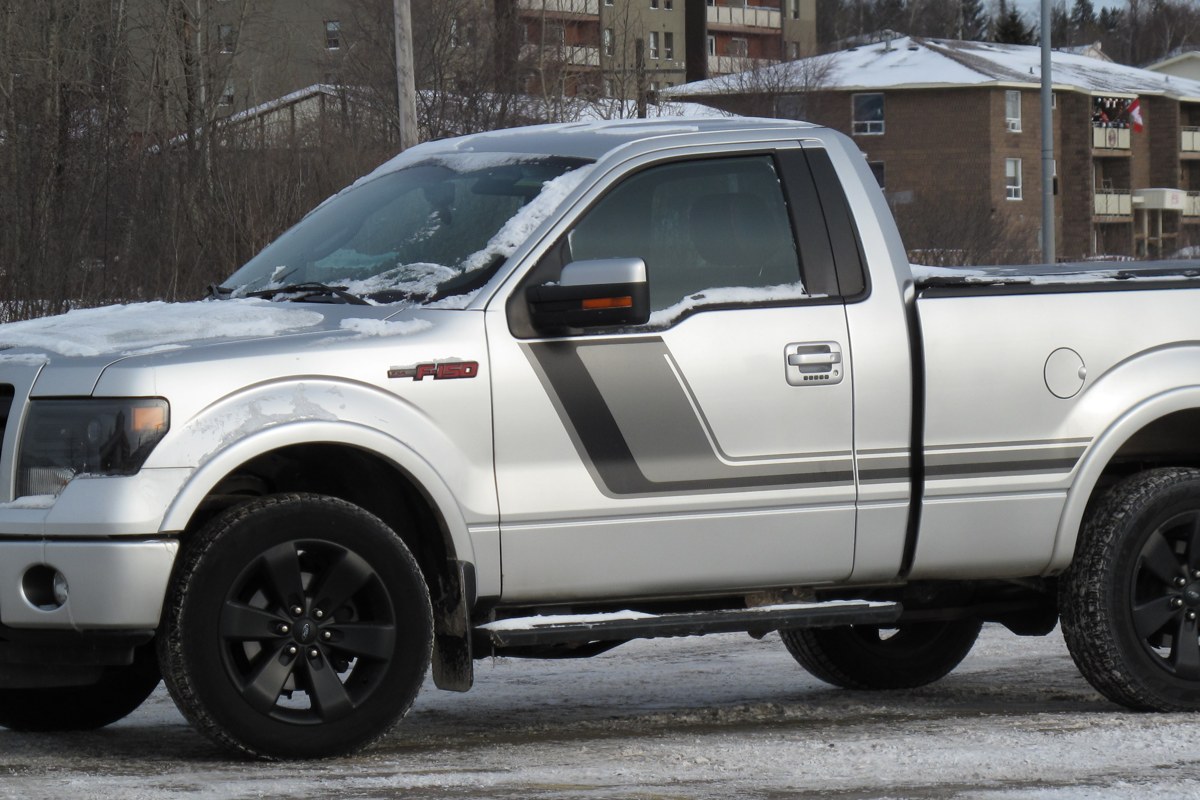
Elise240SX, CC BY-SA 4.0, via Wikimedia Commons
Check your vehicle — whatever its age
- Run your VIN — on this site or at NHTSA.gov/recalls. The lookup covers vehicles of any age, and it is the only way to know whether your specific vehicle has an open recall. A story about a model is not proof; your VIN is the answer.
- Don't wait for a letter. Letters go to the most recent owner the manufacturer can find. If you have moved, bought used, or the vehicle predates good records, the letter may never reach you — the recall is still open either way.
- Call a franchised dealer for the brand and give them your VIN. They can confirm the open campaigns on your vehicle and check parts availability before you make the trip.
- If the work is a recall remedy, the price is $0 — parts and labor. If anyone quotes you a price for the recall repair itself, treat that as a red flag and contact the manufacturer, or NHTSA's Vehicle Safety Hotline at 888-327-4236.
- Driving a retired brand — Pontiac, Saturn, Saab, Mercury, Hummer? Run the VIN anyway. Parent companies generally keep administering their dead brands' recalls; GM, for one, explicitly supports service, parts, and recalls for Pontiac, Hummer, Oldsmobile, Saturn, and Saab.
Recalls cited
Examples referenced in this explainer, from the NHTSA record.
| YEAR RANGE | MODEL |
|---|---|
| 2014 | Ford F-150 |
| 2000–2001 | BMW X5 |
| 2004–2006 | Ford Ranger |
The myth
Safety
The myth goes like this: recalls are a new-car problem, handled under warranty and long settled by the time a truck is on its third owner. So millions of older vehicles run around with open recalls nobody ever claimed — not because the fixes went away, but because the owners assumed they had.
The defect doesn't share that assumption. A recalled air bag inflator in a 2001 SUV is the same inflator, with the same failure mode, as the day it was installed — in the case of Takata inflators, age and humidity make the risk worse, not better. An unexpected downshift into first gear doesn't care that the truck is paid off. An open recall on an old vehicle is not a paperwork relic; it is the same safety problem, still riding around.
What the rule actually means
Here's what the no-expiration rule actually means for an older vehicle. When Ford recalled 552,188 of its 2014 F-150s in June 2024 — trucks that were already ten years old — the free fix didn't come with a countdown clock. Owners who ignored the letter can still get the software update free today. And when Ford found in 2026 that some of those trucks had been repaired incorrectly, it recalled them again (26V-378): in July 2026, owner letters went out for 12-year-old trucks, offering the same fix, free, a second time.
Same story at the extreme end of the odometer. In December 2025, BMW mailed owner letters for 2000–2001 X5s — SUVs a quarter-century old — because their Takata driver air bags can explode, advising owners not to drive them until dealers replace the air bag free of charge. Old vehicles are exactly where unclaimed recalls concentrate, because every previous owner assumed somebody else had handled it.
Getting the free fix
- Status
- Free at the dealer — one 15-year rule decides who must pay, explained below
- Cost
- Free
Federal law (49 U.S.C. § 30120) requires the manufacturer to remedy a safety recall without charge — by repairing the vehicle, replacing it, or refunding the purchase price. In practice it is a repair, performed by a franchised dealer, billed to the manufacturer. The vehicle's age, mileage, and warranty status are irrelevant to that duty — and so is whose name is on the title. The recall follows the vehicle, not the first buyer.
There is one genuine limit, and it is widely misunderstood. NHTSA explains it this way: to be entitled to a free remedy, the vehicle cannot be more than 15 years old on the date the defect or noncompliance is determined, with age counted from the date the vehicle was first sold new. Note where the test applies — at the moment the recall is issued, not on the day you finally visit the dealer. A recall issued on a 10-year-old truck is a free fix at 12, at 15, at 20. What the rule really governs is recalls first announced on already-old vehicles: past the 15-year line at announcement, the manufacturer is no longer legally required to fix it free — though NHTSA notes manufacturers may still provide a free remedy, and often do. The BMW X5 above is the proof: those SUVs were about 24 years old when that recall was announced, and the replacement air bag is free regardless.
The practical limit on very old vehicles isn't the calendar — it's parts. No law requires a manufacturer to keep producing parts forever, so on a 20-year-old vehicle the dealer may need time to source the remedy part, and in rare cases a part may no longer exist. That is a reason to call and ask, not a reason to assume the answer is no. And if a dealer flatly refuses a no-charge recall remedy, NHTSA's advice is to notify the manufacturer: owners are entitled to the remedy without charge and within a reasonable time.
Quick answers
| Do recalls expire? | No — a campaign stays open, and stays checkable by VIN, indefinitely |
| Free repair rule | Manufacturer must remedy without charge — repair, replacement, or refund (49 U.S.C. § 30120) |
| The one limit | Vehicle must be no more than 15 years old on the date the defect is determined, age counted from first sale new (NHTSA) |
| Past 15 at announcement | Free fix not legally required — but manufacturers often provide it anyway (2000–2001 BMW X5, free in 2025) |
| Whose name is on the title | Doesn't matter — the recall follows the vehicle, not the original buyer |
| Example — 2014 Ford F-150 | 24V-444 (552,188 trucks, June 2024), re-recalled as 26V-378 (44,963 trucks, June 2026) for incorrect repairs — free both times · Ford 1-866-436-7332 |
| Example — 2000–2001 BMW X5 | 25V-748 (10,722 vehicles) — Takata air bag, do not drive — free replacement — letters mailed December 29, 2025 · BMW 1-800-525-7417 |
| Tires are different | Free tire remedies cover tires bought within 5 years of the determination; present the tire within 180 days of the notice (NHTSA) |
Questions owners ask
Do recalls really never expire?
The campaign itself doesn't expire. It stays in NHTSA's database, your VIN stays searchable, and a dealer can still perform the remedy years later. What carries a limit is the legal guarantee of a free fix — see the 15-year question below. Even past that limit, manufacturers often still repair vehicles free of charge.
What is the 15-year rule, exactly?
In NHTSA's words, to be eligible for a free remedy the vehicle cannot be more than 15 years old on the date the defect or noncompliance is determined, and the vehicle's age is calculated from the date of sale to the first purchaser. So a defect determined in 2026 must be remedied free on vehicles first sold new from 2011 onward. The test is applied once, when the recall is issued — a recall announced on a 10-year-old truck does not stop being free when the truck turns 16.
I bought my truck used. Am I covered, or was it only the first owner?
You're covered. The recall attaches to the vehicle, not to the person who bought it new — second owner or tenth owner, the remedy is the same and it's free while the campaign is open on your VIN. The 15-year clock is based on the vehicle's first sale date, but that's a measure of the vehicle's age, not a restriction on who can claim.
I never received a recall letter. Does that mean my vehicle isn't included?
No. Letters go to the most recent owner the manufacturer can identify, and older vehicles have often changed hands — and addresses — several times. A missing letter usually means a missing address, not a missing recall. Run your VIN: that's the authoritative check at any age.
The brand doesn't exist anymore — Pontiac, Saturn, Saab, Mercury. Is the recall just dead?
Usually not. Retired brands were almost always divisions of companies that still exist, and the parent typically keeps administering the recalls and supplying the fix. GM states outright that it still supports service, parts, and recalls for Pontiac, Hummer, Oldsmobile, Saturn, and Saab. Run the VIN, then call the parent brand's dealer network. Where no successor company exists at all, parts become the real obstacle — if you hit a wall, NHTSA's Vehicle Safety Hotline (888-327-4236) is the escalation path.
What if the dealer says the part is no longer available?
Ask them to check with the manufacturer before accepting that as final. No law obliges a manufacturer to produce parts forever — that's what makes parts, not the calendar, the practical limit on very old recalls — but remedy parts for old campaigns can often still be sourced. And if a dealer simply refuses a no-charge recall repair, NHTSA's guidance is to notify the manufacturer: you're entitled to the remedy without charge and within a reasonable time.
Does the 15-year rule apply to recalled tires too?
No — tires have their own, shorter rule. Free repair or replacement applies only to tires purchased within five years of the defect determination, and you must present the tire within 180 days of receiving the recall notification. Don't sit on a tire recall letter.
Sources
- NHTSA — Motor Vehicle Safety Defects and Recalls: What Every Vehicle Owner Should Know (revised November 2024)
- NHTSA recall record 25V748000 — 2000–2001 BMW X5 Takata air bag (official campaign record)
- NHTSA recalls API — 2000 BMW X5 campaigns, incl. 25V748000 (verified October 20, 2026)
- NHTSA recalls API — 2014 Ford F-150 campaigns, incl. 24V444000 and 26V378000 (verified October 20, 2026)
- NHTSA interpretation letter — no Safety Act provision requires manufacturers to produce replacement parts for any period
- GM — Discontinued Brands: service, parts, and recalls for Pontiac, Hummer, Oldsmobile, Saturn, and Saab
Last verified October 20, 2026 against official sources. If a source link disagrees with this article, the official record governs — tell us and we will correct it.
Old truck, old car — the check is free and takes a minute.
Check your VINWhat this story means
An explainer built on official NHTSA guidance. A story about a model is not proof that an individual VIN is affected or that a repair remains open.
Not affiliated
MyAutoRecalls is not affiliated with any manufacturer or the National Highway Traffic Safety Administration.
Corrections
When material facts change, this article is visibly updated with a new material-update date. Report an error.