
Recall News · Owner's guide DRAFT
Lending your car? The borrower never gets the recall letter.
Recall letters go to the owner of record — never to the person borrowing the car. Our database holds 205 do-not-drive campaigns and 103 park-outside campaigns, and every one of those warnings stops at the owner's mailbox. Lending your car means lending its recall status too, and the borrower inherits the risk without ever seeing the letter. A minute with the VIN before you hand over the keys is the only warning they'll get.
Check if your vehicle is affected
A story about a model is not proof that your individual vehicle is affected. Only a VIN check can tell you whether your vehicle has an open recall.
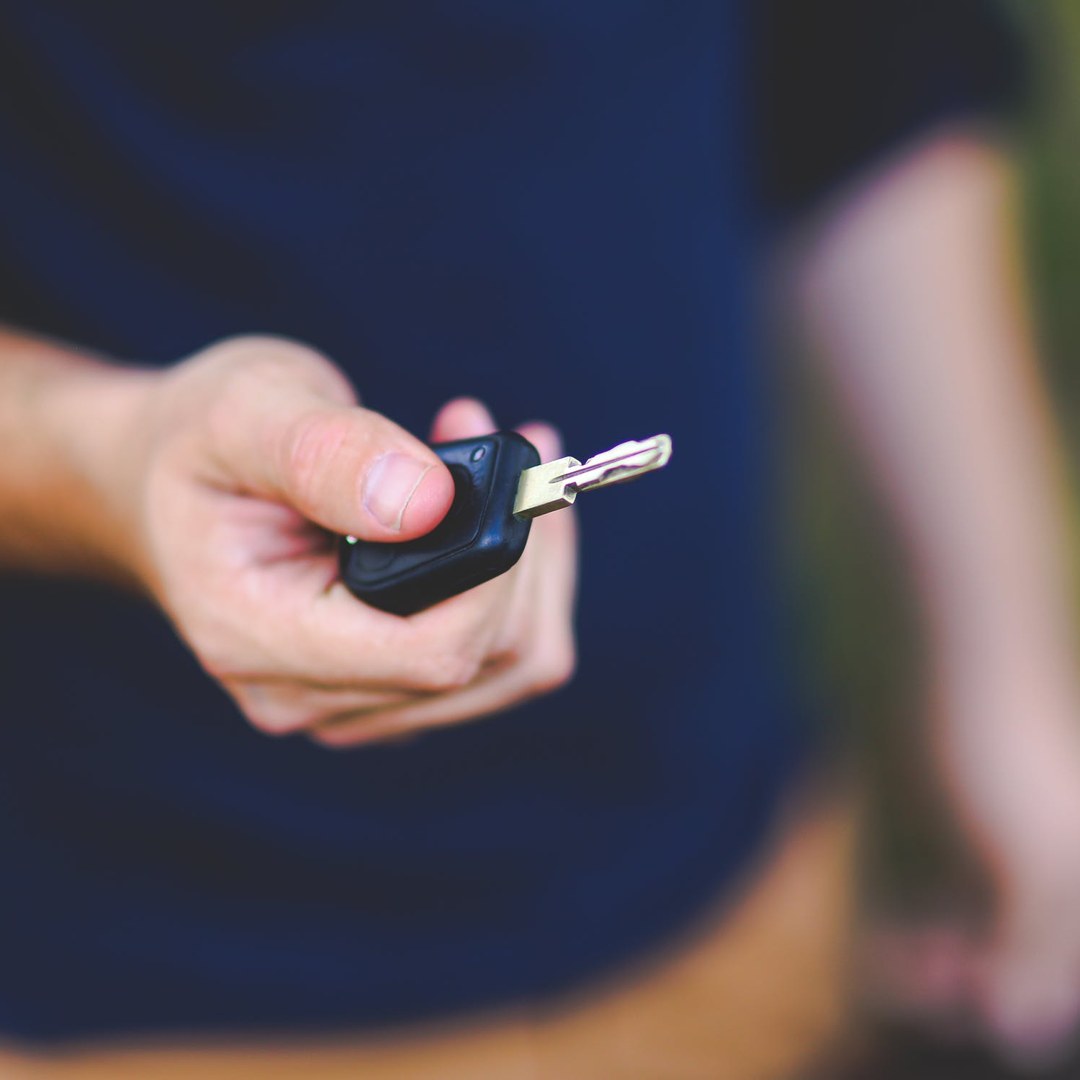
@kaboompics, CC0, via Wikimedia Commons
Before you hand over the keys: the checklist
- Before you hand over the keys, run the VIN through the free check at the top of this page — not just for your own knowledge, but for the borrower's.
- If anything is open, tell the borrower in plain language before they leave: what the defect is, what the interim rule is, and what to do if it happens. A text message counts; silence doesn't.
- If the car carries a do-not-drive order, don't lend it until the fix is done. No trip is worth a brake-booster or tie-rod failure in someone else's hands.
- If it carries a park-outside order, say so explicitly — where to park, and what not to do (don't charge it in the garage, don't park it under the carport).
- When the car comes back, re-check the VIN and book any open fixes. Lending the car doesn't pause the recall, and the next borrower inherits whatever is still open.
Affected vehicles
Model years included in this recall, per the NHTSA record.
| YEAR RANGE | MODEL | NOTES | VEHICLES |
|---|---|---|---|
| 2006–2012 | Mercedes-Benz ML, GL & R-Class | Example — NHTSA 24V-298: moisture can accumulate and damage the brake booster. Owners are advised not to drive until the remedy is performed. The borrower of this car would never see that letter. | 15,604 |
| 2025 | PACCAR Kenworth & Peterbilt trucks | Example — NHTSA 24V-433: the tie rod or drag link ball stud may break, which can cause a complete loss of steering control. Owners are advised not to drive until dealers inspect and replace the assemblies. A borrowed work truck carries the same order. | 7,410 |
| 2026 | Subaru Crosstrek & Forester | Example — NHTSA 26V-685: the castle nut on the left-front lower control arm ball joint may be improperly fastened, and the joint can separate. Do not drive until the remedy is complete — even though only 8 vehicles are affected. | 8 |
Why the borrower is the last to know
Safety
Recall notification has a blind spot shaped exactly like a borrowed car. Letters go to the owner of record, at the address on file, when the recall is announced. The person driving the car this weekend — your kid home from college, your brother moving house, your friend whose car is in the shop — gets nothing. No letter, no warning, no interim rule. The manufacturer warned you. The risk rides with them.
The orders borrowers miss are the serious ones. Our database holds 205 do-not-drive campaigns and 103 park-outside campaigns. Mercedes' 24V-298 covers 15,604 ML, GL, and R-Class vehicles from 2006–2012 whose brake boosters can fail from moisture accumulation — owners are told not to drive until the remedy is performed. PACCAR's 24V-433 covers 7,410 Kenworth and Peterbilt trucks from 2025 whose tie rod or drag link ball studs may break — same order, same silence for the driver who isn't the owner.
Population size doesn't protect the borrower either. Subaru's 26V-685 covers just 8 Crosstreks and Foresters from 2026 whose ball joints can separate from the control arm — and carries the same do-not-drive order as the 15,604-vehicle Mercedes campaign. The borrower of one of those 8 cars is exactly as uninformed and exactly as exposed. The warning, not the count, is what matters — and the warning only reaches the owner.
What the check changes about lending
The check changes lending from a favor into a handoff with a safety brief. 'Here's the car' becomes 'here's the car, here's the one open recall, here's the rule until it's fixed.' That conversation takes two minutes and is the only version of the manufacturer's warning the borrower will ever receive.
It also changes which loans happen at all. A car under a do-not-drive order doesn't get lent until the fix is done — not because you're being difficult, but because the manufacturer has already told you, in writing, that the car shouldn't be driven. The fix is free and usually quick; the loan can wait a day.
And it changes what comes back. A borrowed car returns with its recall status unchanged — the fix doesn't happen by itself while it's away. Re-checking the VIN when it returns, and booking whatever is still open, is how the car gets safer instead of just older.
Remedy and cost
- Status
- Free at an authorized dealer — fix first, lend second
- Cost
- Free
If the check finds an open recall with a do-not-drive order, the fix comes first and the loan comes second. Dealers perform recall remedies free of charge — Mercedes inspects the brake booster and replaces it as necessary, PACCAR inspects and replaces the tie rod and drag link assemblies as necessary, Subaru inspects and replaces the ball joint assembly as necessary — and the car is lendable again the day the work is done.
For park-outside and other interim orders, the remedy is the conversation: tell the borrower the rule, in writing, before they leave. Then book the fix for when the car returns. A completed recall resolves on the VIN record, which is also how you prove to the next borrower that the car is clear.
Recall details
| Guide type | Owner's guide — evergreen advice, not a single recall |
| Database counts | 205 do-not-drive campaigns and 103 park-outside campaigns (MyAutoRecalls database, counted October 28, 2026) |
| Campaigns referenced | 3 — NHTSA 24V-298, 24V-433, 26V-685 |
| Cost of the fix | Free — recall remedies are performed at no charge |
| Who gets the letter | The owner of record — never the borrower |
| Time to check | About a minute with the VIN |
Questions owners ask
Is it unsafe to lend a car with an open recall?
It depends on the recall. Many recalls don't restrict driving: the fix is free and can wait for a dealer visit. A do-not-drive order is different. It means the manufacturer has said the car shouldn't be driven until it's repaired, so don't lend it. Run the VIN to find out which kind you have, and read the recall's own text. The letter went to you; the risk goes with the keys.
Does every open recall mean I can't lend the car?
Only if the defect is a do-not-drive order, or a park-outside order the borrower can't follow. Most recalls are fix-at-your-convenience — lend the car, tell the borrower the fix is pending, and book it when it returns.
Won't the borrower get notified too?
It goes to the owner of record at the address on file — you. The borrower gets nothing from the manufacturer, the dealer, or NHTSA. If you don't pass the warning along, nobody does.
What exactly should I tell the borrower?
Say it out loud and in writing: the defect, the interim rule (park outside, don't charge, don't drive), and what to do if the symptom appears. 'Be careful with it' is not a warning.
Sources
- NHTSA recall record 24V298000 — Mercedes-Benz brake booster, 15,604 vehicles, do not drive (official campaign record)
- NHTSA recall record 24V433000 — PACCAR tie rod / drag link ball stud, 7,410 vehicles, do not drive (official campaign record)
- NHTSA recall record 26V685000 — Subaru ball joint, 8 vehicles, do not drive (official campaign record)
- MyAutoRecalls recall database — 205 do-not-drive campaigns; 103 park-outside campaigns (counted October 28, 2026)
- NHTSA — vehicle safety recalls: check by VIN (official guidance)
Last verified October 28, 2026 against official sources. If a source link disagrees with this article, the official record governs — tell us and we will correct it.
Drive one of these? Check your VIN to see if your specific vehicle is affected.
Check your vehicleWhat this story means
An editorial explainer about a federal recall. A story about a model is not proof that an individual VIN is affected or that a repair remains open.
Not affiliated
MyAutoRecalls is not affiliated with any manufacturer or the National Highway Traffic Safety Administration.
Corrections
When material facts change, this article is visibly updated with a new material-update date. Report an error.