
Recall News · Buyer's guide
Your teen's first car: the recall check nobody does.
First cars are old cars — and old cars carry long recall tails. Across the ten models that fill high-school parking lots, our database counts 222 recall campaigns for the 2006–2016 model years alone, many of them for the air bags parents assume are protecting their kid. The notification letters went to strangers a decade ago. The check takes a minute, the fix is free, and it's the parent's job — because no teenager is going to do it.
Check if your vehicle is affected
A story about a model is not proof that your individual vehicle is affected. Only a VIN check can tell you whether your vehicle has an open recall.
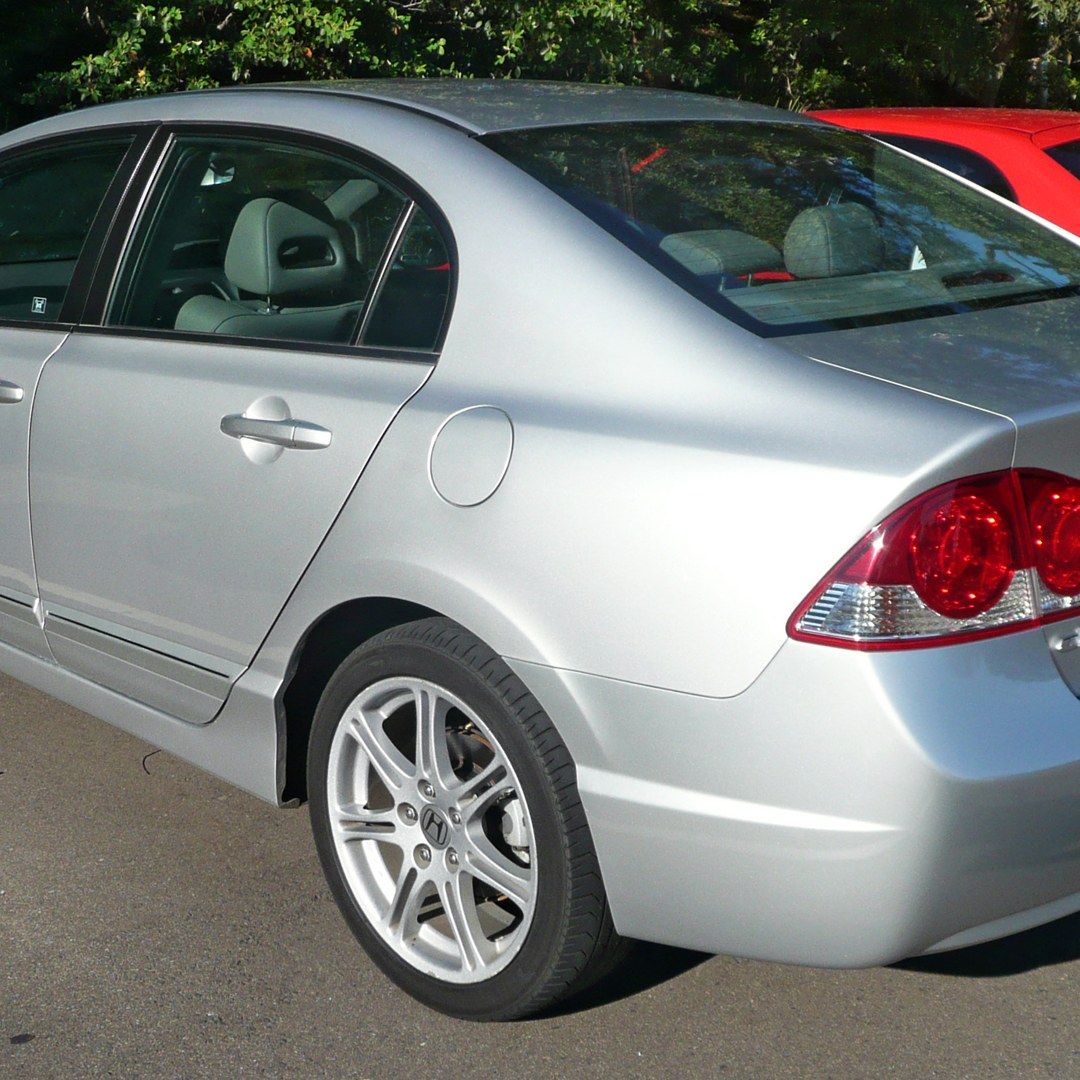
OSX, public domain, via Wikimedia Commons
The parent's checklist
- Add the VIN to your inspection list, next to tires, brakes and title. Get it from the dash plate or door-jamb sticker — or a photo of it from the seller before you visit.
- Run the free VIN check at the top of this page. Read the open campaigns' consequence lines out loud. If it mentions air bags, brakes, steering or fire, it gets fixed before your teen drives the car — full stop.
- Budget zero dollars and one errand: the fixes are free, but somebody has to take the car in. Decide before purchase whether the seller does it or you do, and put it on the calendar either way.
- After the fixes, re-run the VIN to confirm the campaigns closed, and file the paperwork with the title. If a campaign's remedy isn't available yet, write the campaign number where you'll see it monthly until it is.
- Set the twice-a-year re-check habit now — tie it to oil changes or daylight-saving weekends. Cars of this age keep getting added to campaigns; the 2004–2006 Ranger was recalled in 2023 over work done under a 2010s recall.
- Tell your teen what was fixed and why. Not to scare them — so the habit transfers when the next car is theirs to manage.
Affected vehicles
Model years included in this recall, per the NHTSA record.
| YEAR RANGE | MODEL | NOTES | VEHICLES |
|---|---|---|---|
| 2006–2011 | Honda Civic (campaign covers more models) | Example — NHTSA 17V-030: Takata front passenger air bag inflators can rupture; dealers replace them free of charge. Announced 2017 — to the owners of record then. | 977,708 |
| 2013–2014 | Nissan Altima (campaign covers more models) | Example — NHTSA 14V-138: the occupant sensor may read the passenger seat as empty even when an adult is sitting in it, and switch the passenger air bag off; a free software update fixes it. Announced 2014. | 989,701 |
Why first cars carry the longest tails
Safety
The math of a first car works against you: the budget says ten years old, and ten years is exactly how long a recall tail gets. Across the ten models that dominate the first-car market — Corolla, Civic, Accord, Camry, Altima, Sentra, Focus, Cruze, Elantra, Jetta — our database counts 222 recall campaigns touching the 2006–2016 model years. Your teen's car is not the exception to this. Statistically, it is the center of it.
Read what the big ones are for. Honda's 17V-030 covers 977,708 vehicles whose Takata passenger air bag inflators can rupture in a crash — the Civic, the archetypal first car, is on the list. Nissan's 14V-138 covers 989,701 vehicles whose occupant sensor can read the passenger seat as empty even with an adult sitting in it, and switch that air bag off entirely. The systems parents picture when they think 'safe car' are the systems with the longest recall lists.
None of this reaches a teenage buyer. The letters for the Civic campaign were mailed in 2017, to whoever owned the car then. The Altima's went out in 2014. A first car typically passes through two or three owners, an auction and a buy-here-pay-here lot between that letter and your driveway. Nobody in that chain is responsible for telling you. There is only the check.
What the check changes
An open recall on a first car is not a defect you pay for — the fix is free at any authorized dealer, on a $3,000 car exactly as on a $30,000 one. What it changes is sequencing: the recall check belongs in the purchase inspection, before the car becomes your teen's daily transportation, not in the 'someday' pile.
It also changes the conversation with your teen. A new driver cannot evaluate 'the passenger air bag might not deploy' the way you can. The right frame is simple: the car gets its known safety defects fixed before it carries your kid and their friends — non-negotiable, like tires with tread.
And it gives you a standing habit to hand over with the keys: recalls keep being announced for cars of this age, including expansions of old campaigns. A VIN check twice a year — say, at every oil change — catches what the mail never will.
Remedy and cost
- Status
- Free at the dealer, even on a $3,000 car
- Cost
- Free
If the check turns up an open recall, book it at any authorized dealer for the brand — free of charge, no warranty needed, no original-owner paperwork. Air bag campaigns like the Civic's are treated as priority work; ask for the earliest slot and, until it's done, use the manufacturer's guidance (for Takata inflators, that historically meant limiting front-seat passengers on the affected side).
If the seller — dealer or private — says the recalls were handled, verify with the same VIN check after their 'fix' date: a completed campaign resolves on the record. If it still shows open, ask for the repair order before you pay.
Recall details
| Guide type | Buyer's guide — for parents buying a first car |
| Database count | 222 campaigns across Corolla, Civic, Accord, Camry, Altima, Sentra, Focus, Cruze, Elantra and Jetta for model years 2006–2016 (October 21, 2026) |
| Campaigns referenced | 2 — NHTSA 17V-030, 14V-138 |
| Cost of the fix | Free — recall remedies are performed at no charge |
| Time to check | About a minute with the VIN |
| Who should do it | The parent — before the keys change hands |
Questions owners ask
The car is 12 years old. Are recalls even still free?
Almost certainly yes. The federal free-remedy guarantee covers vehicles up to 15 years old, counted from when the car was first sold new — and the campaigns in this guide (2014, 2017) sit comfortably inside it. Even past the window, manufacturers often still fix safety defects free; the VIN check and one dealer call settle it.
We're buying from a family friend. Isn't checking awkward?
Less awkward than the alternative. Most private sellers genuinely don't know their car's recall status — the letters predate their ownership too. Frame it as routine: 'we run this on any car.' It protects their conscience as much as your kid.
Should an open air bag recall kill the purchase?
Not by itself — it should schedule the purchase. The fix is free and dealers prioritize air bag work. Buy the car if it's otherwise right, get the campaign completed before your teen starts driving it daily, and follow the manufacturer's interim guidance (often: don't use the affected seat) until then.
My teen already has the car. What now?
Run the VIN tonight. If something's open, book it this week and, for air bag or fire-risk campaigns, follow the interim safety guidance until the appointment. Then set the twice-a-year re-check habit.
Do state inspections catch open recalls?
Generally no. Safety inspections check the car's current mechanical state — lights, brakes, tires, emissions. An unperformed recall is a paperwork status, not a visible defect, and most state programs don't test for it. A few registration systems flag recalls, but you can't count on it.
Sources
- NHTSA recall record 17V030000 — Honda Takata passenger inflators, 977,708 vehicles (official campaign record)
- NHTSA recall record 14V138000 — Nissan occupant classification software (official campaign record)
- MyAutoRecalls recall database — 222 campaigns across ten first-car models for model years 2006–2016 (counted October 21, 2026)
- NHTSA — Recalls & safety issues: free repairs at authorized dealers regardless of owner (official guidance)
Last verified November 4, 2026 against official sources. If a source link disagrees with this article, the official record governs — tell us and we will correct it.
Drive one of these? Check your VIN to see if your specific vehicle is affected.
Check your vehicleWhat this story means
An editorial explainer about a federal recall. A story about a model is not proof that an individual VIN is affected or that a repair remains open.
Not affiliated
MyAutoRecalls is not affiliated with any manufacturer or the National Highway Traffic Safety Administration.
Corrections
When material facts change, this article is visibly updated with a new material-update date. Report an error.