
Recall News · Owner's guide
Your car was recalled before you bought it. The fix is still free.
Nearly half the recalls in our database — 7,518 campaigns — were filed before 2019. They didn't expire when the car changed hands, because a recall belongs to the vehicle, not to whoever owned it when the letter went out. If your car was recalled under a previous owner and never fixed, the free repair is still sitting there with your VIN on it.
Check if your vehicle is affected
A story about a model is not proof that your individual vehicle is affected. Only a VIN check can tell you whether your vehicle has an open recall.
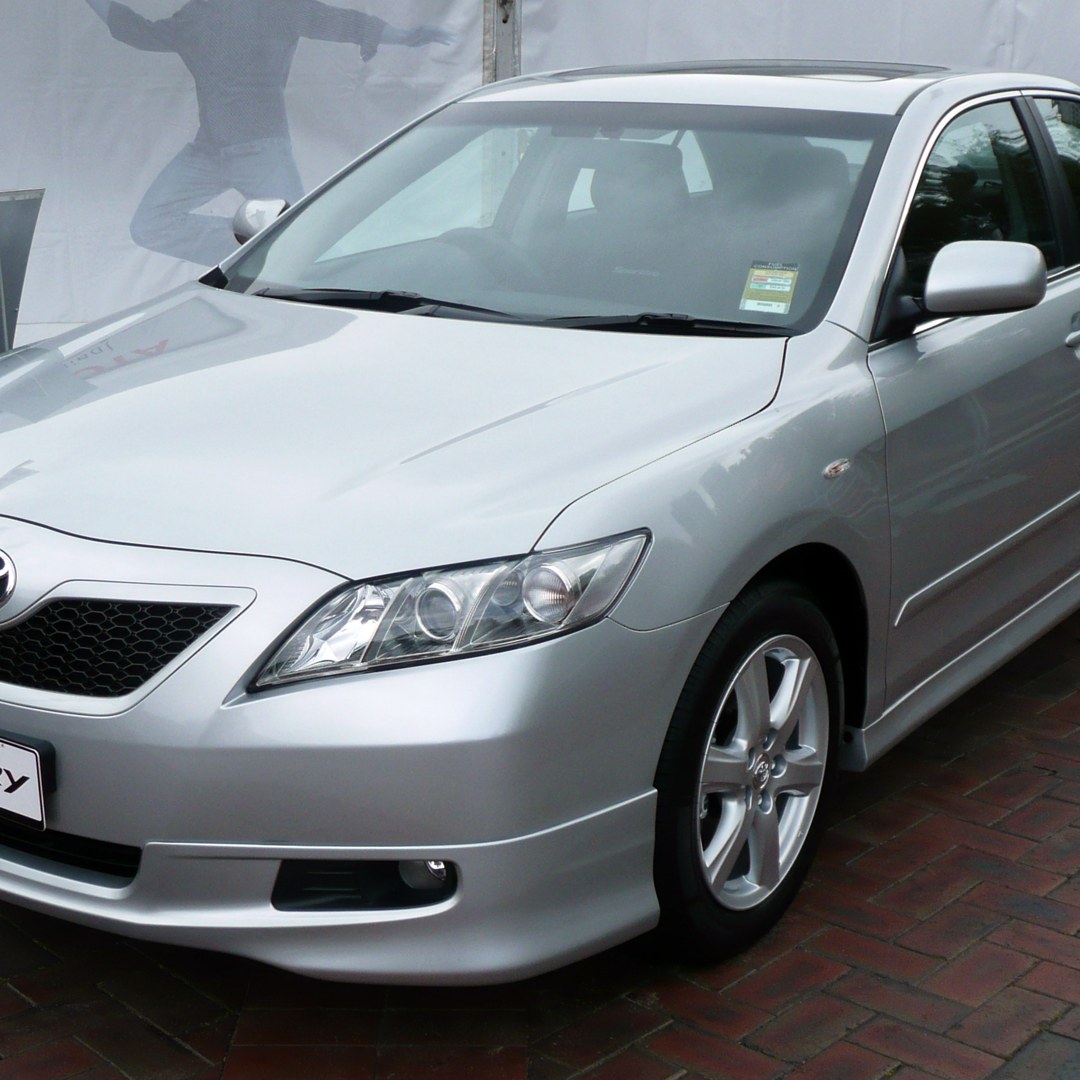
OSX, public domain, via Wikimedia Commons
The current owner's checklist
- Run the VIN you already own — this guide isn't only for shoppers. Most people reading it are years into ownership of a car they've never checked.
- Read every open campaign, however old. A 2012 window-switch recall and a 2026 software recall carry the same word 'open' for a reason: neither fix has been done.
- Book the oldest safety items first — anything mentioning fire, air bags, brakes, steering or fuel jumps the queue regardless of its year.
- At the dealer, confirm the visit will close the campaigns on your VIN, and keep the repair order with the car's records. It raises the car's value and ends the question for the next owner.
- Re-check the VIN after the visit to watch the campaigns resolve — and once a year after that. Old cars still get added to new campaigns, including expansions of recalls from their era.
Affected vehicles
Model years included in this recall, per the NHTSA record.
| YEAR RANGE | MODEL | NOTES | VEHICLES |
|---|---|---|---|
| 2007–2009 | Toyota Camry, Corolla, RAV4 & more | Example — NHTSA 12V-491: the power window master switch can overheat, melt and possibly cause a fire. Filed in 2012; any of these cars bought used since then carried the open recall with them. | 2,519,424 |
| 2004–2012 | General Motors Chevrolet Malibu & Pontiac G6 | Example — NHTSA 14V-252: an electrical defect in the body wiring that can affect the brake lights and stability control. Filed in 2014 — most of these cars are on their third or fourth owner by now. | 2,440,524 |
The letter you never saw
Safety
Somewhere in your car's past there may be a letter you never saw. It went to the first owner, at their old address, in 2012 or 2014, announcing a defect and a free fix. If they ignored it, traded the car in, or never got it, the letter died there — but the recall didn't. Our database holds 7,518 campaigns filed before 2019, and every one of them that was never performed is still open on some car, somewhere, right now.
The examples are not obscure. Toyota's 12V-491 covers 2,519,424 vehicles — 2007–2009 Camrys, Corollas, RAV4s and more — whose power window master switch can overheat and melt, possibly causing a fire. GM's 14V-252 covers 2,440,524 Malibus and Pontiac G6s with an electrical defect that can take out brake lights and stability control. Cars from both campaigns have been bought and sold for a decade. Their current owners mostly have no idea.
The misconception that protects these defects is the idea that a recall is like a warranty — a benefit for the original buyer that lapses at resale. It isn't. A recall is a manufacturer's obligation about a specific vehicle, identified by its VIN. Owners change. The VIN doesn't.
Why the fix follows the car
Because the obligation follows the vehicle, there is nothing to transfer, register or claim. You don't need the previous owner's cooperation, their paperwork, or proof of when you bought the car. You need the VIN and an open campaign; the dealer's system closes the loop from there.
It also means a used car's recall status is knowable before you own it — and fixable after, free, either way. The only genuinely bad outcome is never checking: driving for years on a defect the manufacturer has been offering to fix since before you owned the car.
One honest limit: the federal free-repair guarantee covers vehicles up to 15 years old, counted from first sale — so the very oldest campaigns may fall outside the guaranteed window. Manufacturers frequently still perform those fixes free (the parts are cheap next to the liability), but past 15 years it becomes their choice rather than their obligation. The check costs nothing either way; ask.
Remedy and cost
- Status
- Free to the current owner — no transfer, no paperwork, no fee
- Cost
- Free
Run the VIN check at the top of this page. If a campaign shows open, call any authorized dealer for the brand, give them the VIN and campaign number, and book it. Expect them to verify the vehicle in their system — that's the whole process. No original-owner documents exist in it because none are needed.
If the dealer says a recall shows completed but your check still lists it open, ask for the completion date and campaign code from their system; records occasionally lag, and a repair order settles it. If the car was 'fixed' under a campaign that was later re-issued — it happens — the new campaign is free as well.
Recall details
| Guide type | Owner's guide — for anyone who bought used |
| Database count | 7,518 of 15,634 campaigns were filed before 2019 (MyAutoRecalls database, October 21, 2026) |
| Campaigns referenced | 2 — NHTSA 12V-491, 14V-252 |
| What transfers | The recall itself — automatically, with the vehicle |
| What you need | The VIN. No bill of sale, no original-owner documents |
| Cost of the fix | Free at an authorized dealer |
Questions owners ask
Do I need to prove I bought the car, or when?
No. The dealer works from the VIN. Ownership history, purchase date and the original owner's identity are irrelevant to a recall remedy — the obligation is attached to the vehicle.
The previous owner said they 'got the letter but never went in.' Am I covered?
Yes — that's the most common situation there is. The campaign is still open on the car, the fix is still free, and your visit is what closes it.
What if the car is more than 15 years old?
The federal guarantee of a free remedy applies to vehicles no more than 15 years old when the defect was determined. Beyond that, manufacturers often still fix safety defects free — but it becomes goodwill rather than obligation. Run the check and call; the answer is frequently yes.
Can a dealer refuse because I didn't buy the car there?
No. Any authorized dealer for the brand performs recall work, and the manufacturer pays them for it. Where you bought the car — or whether you've ever visited that dealership — doesn't matter.
I just bought the car last week. Is it too soon to check?
It's the ideal time. Catching an open recall in your first month means the fix happens before the car settles into your routine — and if the seller misrepresented the car's status, you learn that while it still matters.
Sources
- NHTSA recall record 12V491000 — Toyota power window switch, 2,519,424 vehicles (official campaign record)
- NHTSA recall record 14V252000 — GM Malibu/G6 electrical defect, 2,440,524 vehicles (official campaign record)
- MyAutoRecalls recall database — 7,518 of 15,634 campaigns carry filing dates before 2019 (counted October 21, 2026)
- NHTSA — Recalls & safety issues: remedies are free to the vehicle's owner (official guidance)
Last verified November 5, 2026 against official sources. If a source link disagrees with this article, the official record governs — tell us and we will correct it.
Drive one of these? Check your VIN to see if your specific vehicle is affected.
Check your vehicleWhat this story means
An editorial explainer about a federal recall. A story about a model is not proof that an individual VIN is affected or that a repair remains open.
Not affiliated
MyAutoRecalls is not affiliated with any manufacturer or the National Highway Traffic Safety Administration.
Corrections
When material facts change, this article is visibly updated with a new material-update date. Report an error.