
Recall News · Buyer's guide
Certified pre-owned? The sticker can't see the recall record.
Certified pre-owned sounds like a clean bill of health. It isn't — it's a condition report from one day, and recalls are a stream. A car certified in January can be recalled in March, and no new sticker appears. Only the VIN run proves the record is clear today.
Check if your vehicle is affected
A story about a model is not proof that your individual vehicle is affected. Only a VIN check can tell you whether your vehicle has an open recall.
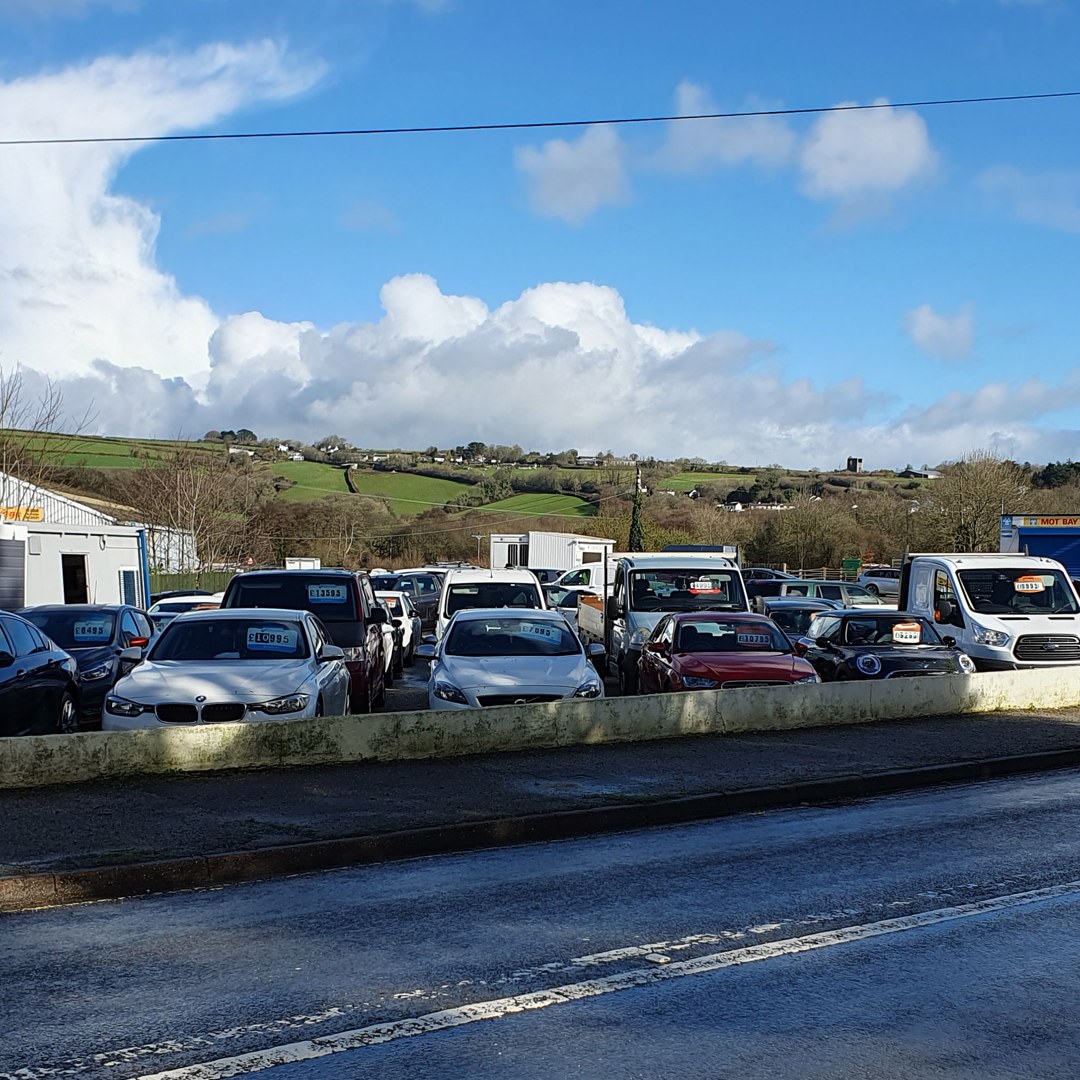
Mutney, CC0, via Wikimedia Commons
Before you sign: the checklist
- Get the VIN before you pay — the window sticker and the certification paperwork are not a recall record. Ask the dealer for the VIN and run it yourself.
- Run it through the free check at the top of this page. Note every open campaign and read the consequence line: a software update and a fire risk are both 'one open recall' until you read them.
- If anything is open, ask the dealer to complete it before delivery. The manufacturer pays for recall repairs, not you. If the fix is available, there is little reason a certified car should leave the lot with it undone. If parts aren't ready yet, get the interim instructions in writing.
- Ask specifically about recalls announced after the car was certified. Certification is a date, not a shield: a car certified in January can be recalled in March.
- After delivery, re-run the VIN to confirm the record is clear, keep the repair paperwork, and check again once a year. New campaigns keep arriving.
Affected vehicles
Model years included in this recall, per the NHTSA record.
| YEAR RANGE | MODEL | NOTES | VEHICLES |
|---|---|---|---|
| 2022–2026 | Toyota Sienna Hybrid (7-passenger) | Example — NHTSA 26V-690: second-row seat backs may fail to remain secured in a crash. The fix is a free dealer software update to the air bag control unit (seat back replacement for MaaS-package vehicles). Owner letters are expected to be mailed December 7, 2026. A 2022–2026 Sienna is prime certified pre-owned stock. | 228,367 |
| 2022–2026 | Ford & Lincoln Escape (2022–2026) & Corsair (2023–2026) plug-in hybrids | Example — NHTSA 26V-091: a battery-cell defect can cause a loss of drive power or a fire. Owners were told to use Auto EV mode only and limit maximum charge until the software fix. Certification paperwork doesn't carry that instruction. | 25,237 |
Why CPO-age cars carry so many campaigns
Safety
Certified pre-owned is a condition promise, not a recall promise. The inspection covers wear, damage, and function on the day it happens. It cannot cover recalls announced the week after — and recalls keep arriving at a pace that makes any single inspection date stale fast.
The examples are not edge cases. Toyota's 26V-690 covers 228,367 Sienna Hybrids from 2022–2026 whose second-row seat backs may fail to stay secured in a crash — exactly the family hauler that fills CPO lots. Ford's 26V-091 covers 25,237 2022–2026 Ford Escape and 2023–2026 Lincoln Corsair plug-in hybrids whose battery cells can fail, with owners told to use Auto EV mode only and limit charging until a software fix. Neither car's certification paperwork carries those instructions.
The confusion is understandable: 'certified' sounds comprehensive. But certification answers 'is this car in good shape?' while a recall answers 'did the manufacturer find a defect in this VIN's design?' Those are different questions, and only the second one comes with a free fix attached. A buyer who confuses them pays the same price for a car with an open defect as for one without — and discovers the difference from a letter that was mailed to someone else.
What certification does and doesn't prove
Nothing about the car's price or the dealer's obligations changes — what changes is what you know before signing. A CPO car with an open recall is not a worse car than the same car fixed; it is the same car with an errand attached. Knowing that before you sign lets you put the errand on the dealer, free, instead of on your own calendar.
It also changes how you read the paperwork. 'Certified' stops being a synonym for 'checked for everything' and becomes what it actually is: a thorough inspection at a point in time. The recall record is the part of the car's history no inspection can see, because it lives in a federal database keyed to the VIN, not under the hood.
After delivery, the habit that matters is the re-check. Certification ends at the sale; recalls don't. A once-a-year VIN run costs a minute and is the only standing answer to a question the sticker stopped answering the day you drove off.
Remedy and cost
- Status
- Free at any authorized dealer — ask for completion before delivery
- Cost
- Free
If the check finds an open recall, any authorized dealer for the brand performs it free of charge — including the dealer selling you the car, if it is a franchised dealer for that brand. Ask for completion before delivery, not after: the manufacturer pays for the repair, and it removes the one defect on the car that was never part of the inspection.
After delivery, re-run the VIN. Completed campaigns should resolve on the record. If anything still shows open, take the repair paperwork back to the dealer — and if a campaign's remedy isn't available yet, get the interim rules in writing before the car leaves the lot.
Recall details
| Guide type | Buyer's guide — evergreen advice, not a single recall |
| Campaigns referenced | 2 — NHTSA 26V-690, 26V-091 |
| Cost of the fix | Free — recall remedies are performed at no charge |
| What certification proves | Condition at inspection time — not recall status |
| Time to check | About a minute with the VIN |
Questions owners ask
Does certified pre-owned mean recall-free?
No — and that's the point of the check. A CPO inspection certifies the car's condition at a moment in time. Recalls are a stream: new ones arrive constantly, and they attach to the VIN, not to the certification. Only a VIN run proves the record is clear today.
Can I make the dealer fix an open recall before I buy?
Ask them to, before delivery. Recall work is free at any authorized dealer, including the one selling you the car. If the remedy is available, the dealer can usually do it before delivery. If parts or the fix aren't ready yet, ask for the interim instructions in writing.
Can a car be recalled after it's certified?
Yes, and that's exactly where the gap opens. A car certified in January and recalled in March carries the recall with no new paperwork, no new sticker, and no letter to you. The certification doesn't update itself.
Will I be charged because I'm not the original owner?
No. Recall remedies are free to whoever owns the vehicle — the obligation attaches to the car, not to the first buyer or the certifying dealer.
Sources
- NHTSA recall record 26V690000 — Toyota Sienna Hybrid seat backs, 228,367 vehicles (official campaign record)
- NHTSA recall record 26V091000 — Ford Escape / Lincoln Corsair plug-in hybrid battery, 25,237 vehicles (official campaign record)
- NHTSA — vehicle safety recalls: check by VIN before you buy (official guidance)
Last verified October 31, 2026 against official sources. If a source link disagrees with this article, the official record governs — tell us and we will correct it.
Drive one of these? Check your VIN to see if your specific vehicle is affected.
Check your vehicleWhat this story means
An editorial explainer about a federal recall. A story about a model is not proof that an individual VIN is affected or that a repair remains open.
Not affiliated
MyAutoRecalls is not affiliated with any manufacturer or the National Highway Traffic Safety Administration.
Corrections
When material facts change, this article is visibly updated with a new material-update date. Report an error.