
Recall News · Buyer's guide
Buying a used truck? Run the VIN before the test drive.
Pickup trucks carry some of the biggest recalls in the database — 825 truck campaigns on record, 362 of them filed since 2021, including a 4.4-million-vehicle recall on 2021–2026 F-150s. A used truck's open recalls are part of its condition, same as its tires and brakes. The check takes a minute, it's free, and it's the only part of the inspection the seller can't detail away.
Check if your vehicle is affected
A story about a model is not proof that your individual vehicle is affected. Only a VIN check can tell you whether your vehicle has an open recall.
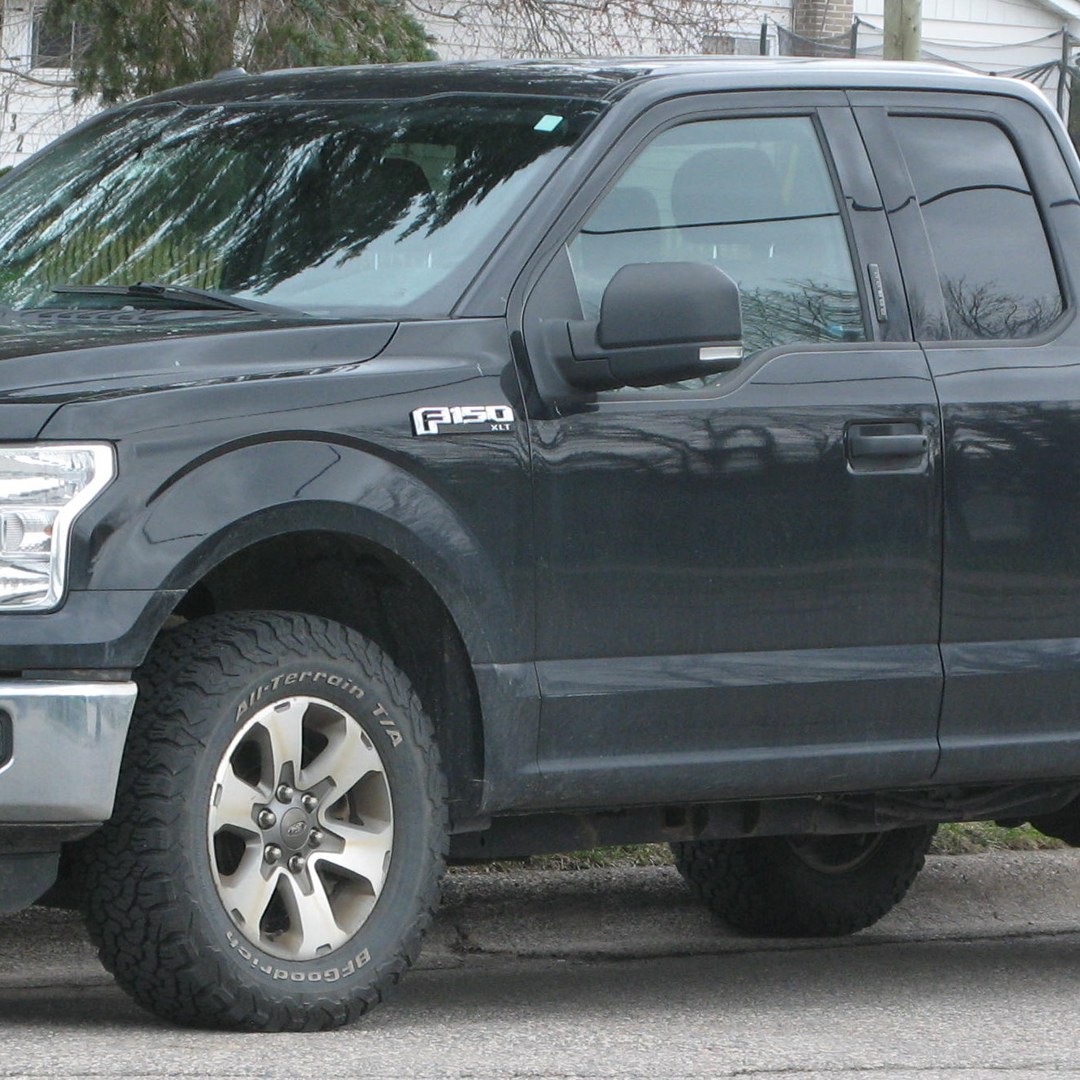
SsmIntrigue, CC BY-SA 4.0, via Wikimedia Commons
Before you buy: the checklist
- Get the VIN before the test drive — ask the seller for a photo of the driver's door-jamb sticker or the dash plate. A seller who won't share a VIN is telling you something the check would have.
- Run it through the free check at the top of this page. Note every open campaign, and read the consequence line, not just the count: a software update and a fire risk are both 'one open recall' until you read them.
- Check for the two red-flag warnings first — do not drive and park outside. Either one changes the deal from 'buy and fix later' to 'fix before it moves.'
- Ask the seller directly what they know. Many genuinely don't. If they claim a recall was completed, plan to verify it after the fix with a fresh VIN run — completed campaigns resolve on the record.
- Decide who runs the errand before you sign: seller fixes it first (free to them at the dealer), or you buy knowing the fix is a dealer visit on your calendar. Either is fine. Not knowing is the only bad option.
- After purchase, re-check the VIN, book the fixes, and keep the paperwork. Then check again once a year — trucks this size keep collecting campaigns, including expansions of ones already announced.
Affected vehicles
Model years included in this recall, per the NHTSA record.
| YEAR RANGE | MODEL | NOTES | VEHICLES |
|---|---|---|---|
| 2021–2026 | Ford F-150 & Super Duty | Example — NHTSA 26V-104: the trailer brake controller can fail; the fix is a free software update. Even a two-year-old truck can carry an open recall. | 4,381,878 |
| 2014–2018 | Ram / FCA Ram 2500 & 3500 (plus cars and Jeeps) | Example — NHTSA 18V-332: cruise control may not cancel; a free software flash fixes it. Heavy-duty trucks change hands often — and letters don't follow them. | 4,815,661 |
| 2004–2006 | Ford Ranger | Example — NHTSA 23V-125: replacement passenger air bag inflators installed under a previous recall may have been installed incorrectly. A recall can itself be recalled. | 98,550 |
Why trucks carry long recall tails
Safety
Trucks work for a living, and their recall history shows it. Our database holds 825 recall campaigns covering pickup trucks — 362 filed since the start of 2021. The single biggest, Ford's 26V-104, covers 4,381,878 vehicles from 2021–2026 — F-150s and Super Dutys, plus Mavericks, Rangers, Navigators, Expeditions, and E-Transits — whose trailer brake controller can fail. That is not an old-truck problem: a truck still under its factory warranty can be sitting on a dealer's used lot with the recall unperformed.
The older end of the lot has longer tails. FCA's 18V-332 covered 4,815,661 vehicles — Ram 2500s and 3500s among them — whose cruise control might not cancel when asked. And Ford's 23V-125 covers 2004–2006 Rangers whose replacement passenger air bag inflators, installed under a previous recall, may themselves have been installed wrong. On a twenty-year-old truck, even 'the recall was done' is a claim worth verifying.
Sellers are not necessarily hiding any of this. Recall letters go to the owner of record at the address on file when the recall is announced. A truck on its third owner, bought at auction, traded across state lines, has outrun its paper trail. The seller may honestly not know. The VIN knows.
What an open recall does to the deal
An open recall is not a reason to walk away from a good truck — the fix is free, at any authorized dealer, whoever owns the truck. It is a reason to know what you are buying before the money moves, the same as a slipping transmission or a rusty frame.
It is also leverage, used fairly: a seller asking top dollar for a truck with two open recalls is asking you to spend your time on the manufacturer's defect. Either they get it fixed before the sale (free to them, too) or the price reflects the errand.
After the sale, the situation inverts. The letters will still not come to you — NHTSA notification follows registration records imperfectly, and plenty of owners are never reached. Once the truck is yours, the only reliable recall notice is the one you run yourself.
Remedy and cost
- Status
- Free at an authorized dealer, before or after you buy
- Cost
- Free
If the check finds an open recall, any authorized dealer for the brand performs it free of charge — no relationship with the selling dealer required, no proof you owned the truck when the recall was announced. Software fixes like 26V-104 and 18V-332 are typically same-day.
If a campaign shows a safety warning — do not drive, park outside — treat it as part of the purchase decision, not a footnote: arrange the fix with the seller before the truck moves, or price in having it towed. After any fix, re-run the VIN; a completed recall should show as resolved, which is also how you verify a seller's 'already done' claim on an older recall.
Recall details
| Guide type | Buyer's guide — evergreen advice, not a single recall |
| Database counts | 825 pickup-truck campaigns all-time; 362 filed 2021–2026 (MyAutoRecalls database, October 21, 2026) |
| Campaigns referenced | 3 — NHTSA 26V-104, 18V-332, 23V-125 |
| Cost of the fix | Free — recall remedies are performed at no charge |
| Time to check | About a minute with the VIN |
| Where the VIN lives | Driver's-side dash plate and door-jamb sticker |
Questions owners ask
Can a dealer legally sell me a used truck with an open recall?
For used vehicles, yes — federal law bars selling NEW vehicles with open recalls, but used sales are not federally banned (some states add their own rules, and rentals are covered by a separate federal law). That's exactly why the check is on you: legal to sell does not mean fixed.
Will the dealer charge me because I'm not the original owner?
No. Recall remedies are free to whoever owns the vehicle — the obligation attaches to the truck, not the first buyer. You don't need the original paperwork, the selling dealer, or a warranty.
The seller says all recalls were done. How do I verify?
Run the VIN. Completed campaigns no longer show as open for that vehicle. If a recall the seller claims was done still shows open, ask for the repair order — and if the work was done wrong, it may itself be covered, as the 2004–2006 Ranger inflator recall shows.
Should an open recall kill the deal?
Usually not — most are free, quick fixes. Let it kill the deal only if the defect is a do-not-drive or fire risk the seller won't address, the remedy isn't available yet with no timeline, or the seller resists you checking at all.
Do commercial and work trucks get recalled too?
Yes — heavy-duty pickups and cab-chassis trucks are covered by the same system (the Ram 2500/3500s in 18V-332 are work trucks). If you're buying for a business, the same VIN check applies, and downtime planning matters even more.
Sources
- NHTSA recall record 26V104000 — Ford trailer brake module, 4,381,878 vehicles (official campaign record)
- NHTSA recall record 18V332000 — FCA cruise control, Ram trucks included (official campaign record)
- NHTSA recall record 23V125000 — Ford Ranger replacement inflators installed incorrectly (official campaign record)
- MyAutoRecalls recall database — 825 campaigns cover pickup-truck models; 362 filed 2021–2026 (counted October 21, 2026)
- NHTSA — vehicle safety recalls: check by VIN before you buy (official guidance)
Last verified November 5, 2026 against official sources. If a source link disagrees with this article, the official record governs — tell us and we will correct it.
Drive one of these? Check your VIN to see if your specific vehicle is affected.
Check your vehicleWhat this story means
An editorial explainer about a federal recall. A story about a model is not proof that an individual VIN is affected or that a repair remains open.
Not affiliated
MyAutoRecalls is not affiliated with any manufacturer or the National Highway Traffic Safety Administration.
Corrections
When material facts change, this article is visibly updated with a new material-update date. Report an error.